

How Much Does Tree Removal Cost in Chapel Hill?
Updated on: December 1, 2025

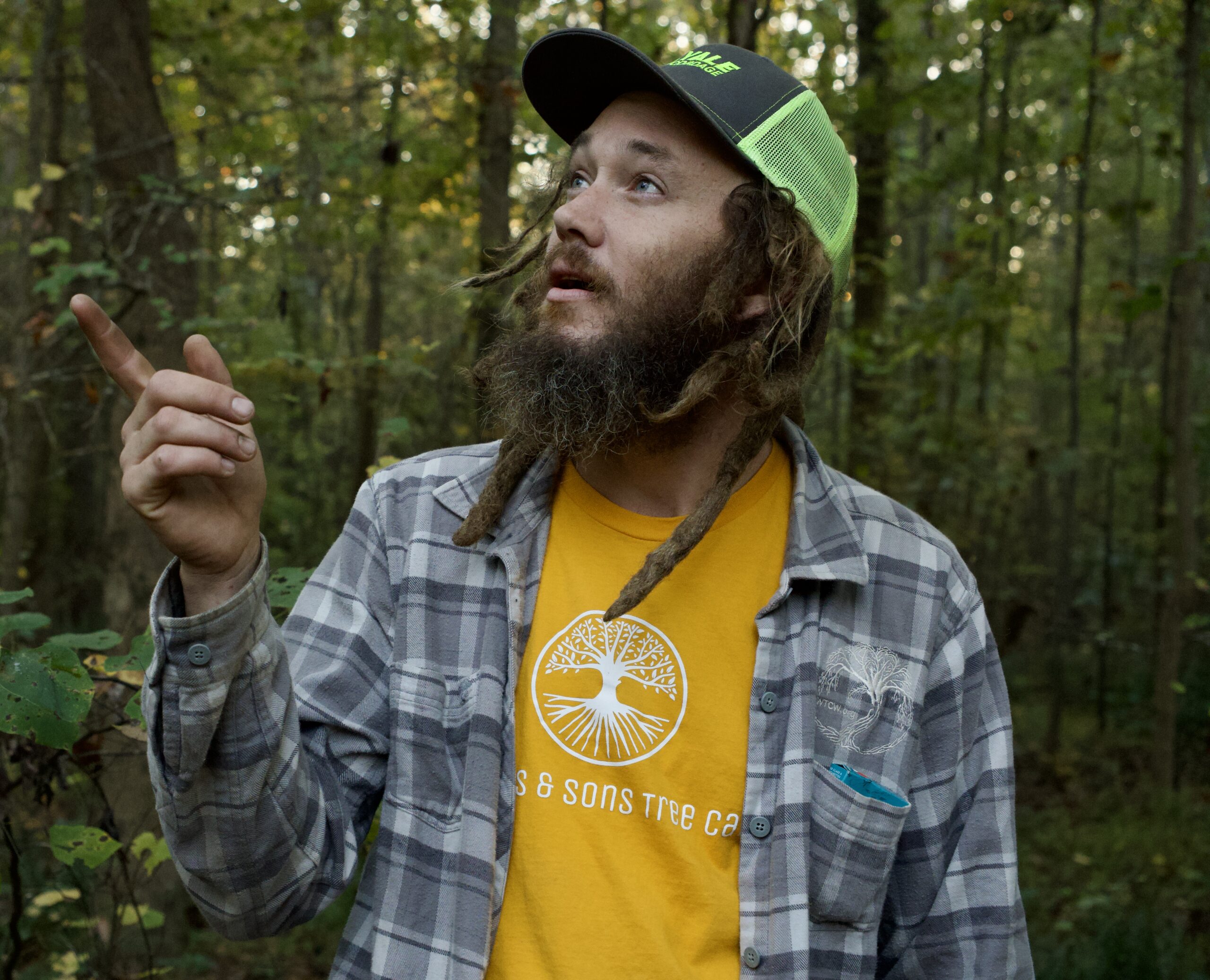
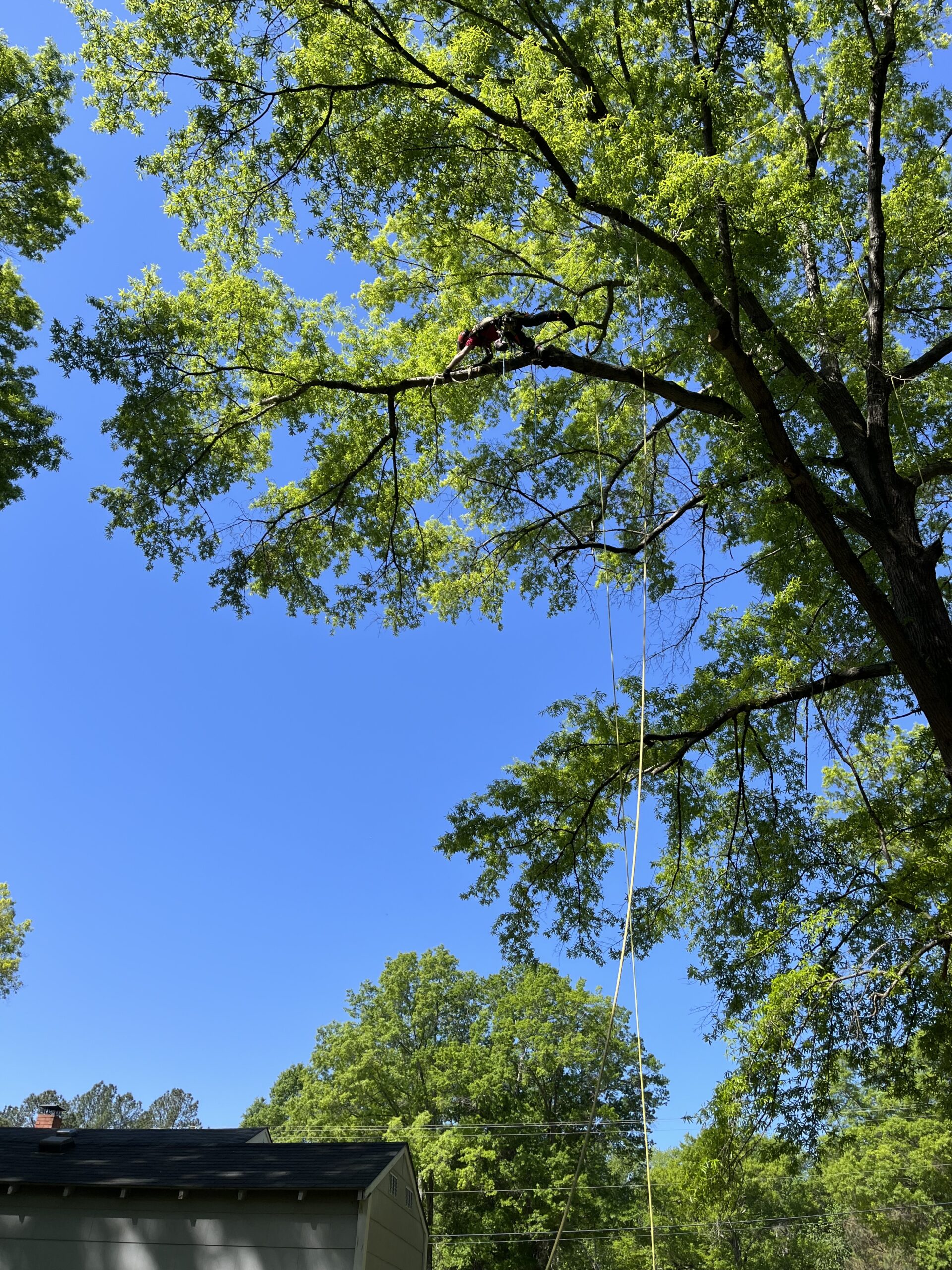
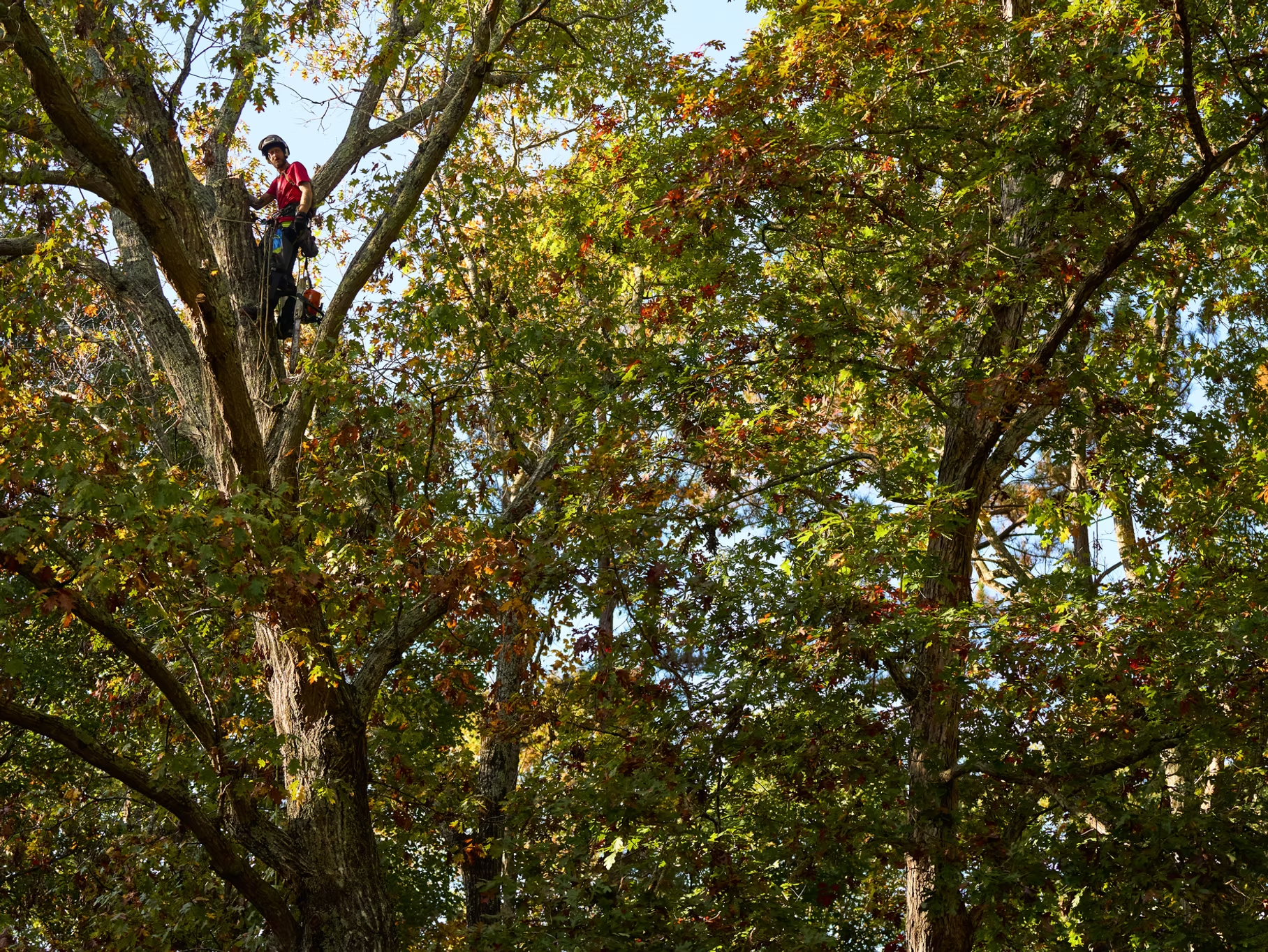
Tommy climbs to remove this large diseased and dying white oak.
If you’ve ever googled “tree removal cost in Chapel Hill” or something similar to try to estimate a price range ahead of speaking with an arborist, you’ve probably noticed that the proclaimed price range is all over the place. Just as google isn’t a doctor, it also isn’t an arborist– and you can find some pretty wild claims.
If you reach out to multiple tree services for quotes, you might get quotes that differ by hundreds—or even thousands—of dollars. As an ISA Certified Arborist and owner of Lubbers & Sons Tree Care, I get a lot of questions about why removal prices vary so much and what homeowners should expect before moving forward.
This guide breaks down the factors that influence tree removal costs, why quality matters, and how to make sense of the quotes you receive.
Why Tree Removal Costs Vary So Widely
It is nearly impossible to answer the general question “what does tree removal cost?” without having quite a bit of additional information. My honest answer is anywhere from $40 to $10,000 (although the majority of tree removals fall in the $350-3,500 range).
Tree removal is one of the most complex services in our industry. Unlike other home services that rely on fixed materials or standardized labor, tree removal is dynamic. Every tree, site, and situation is different. The work methods can vary greatly depending on what is appropriate for your tree on your property, and each tree requires a unique labor/time estimate.
Operating costs between similar tree service companies can also vary, as can the estimator’s skill or understanding of their crew and these operating costs. All of this can affect your cost as the customer.
The most influential tree removal cost variables include:
• Tree size (height, canopy spread, and diameter)
• Tree species and knowledge of how the wood handles, reacts, etc
• Location on the property
• Equipment access
• Structural defects and hazards
• Proximity to buildings, driveways, fences, or any landscape features
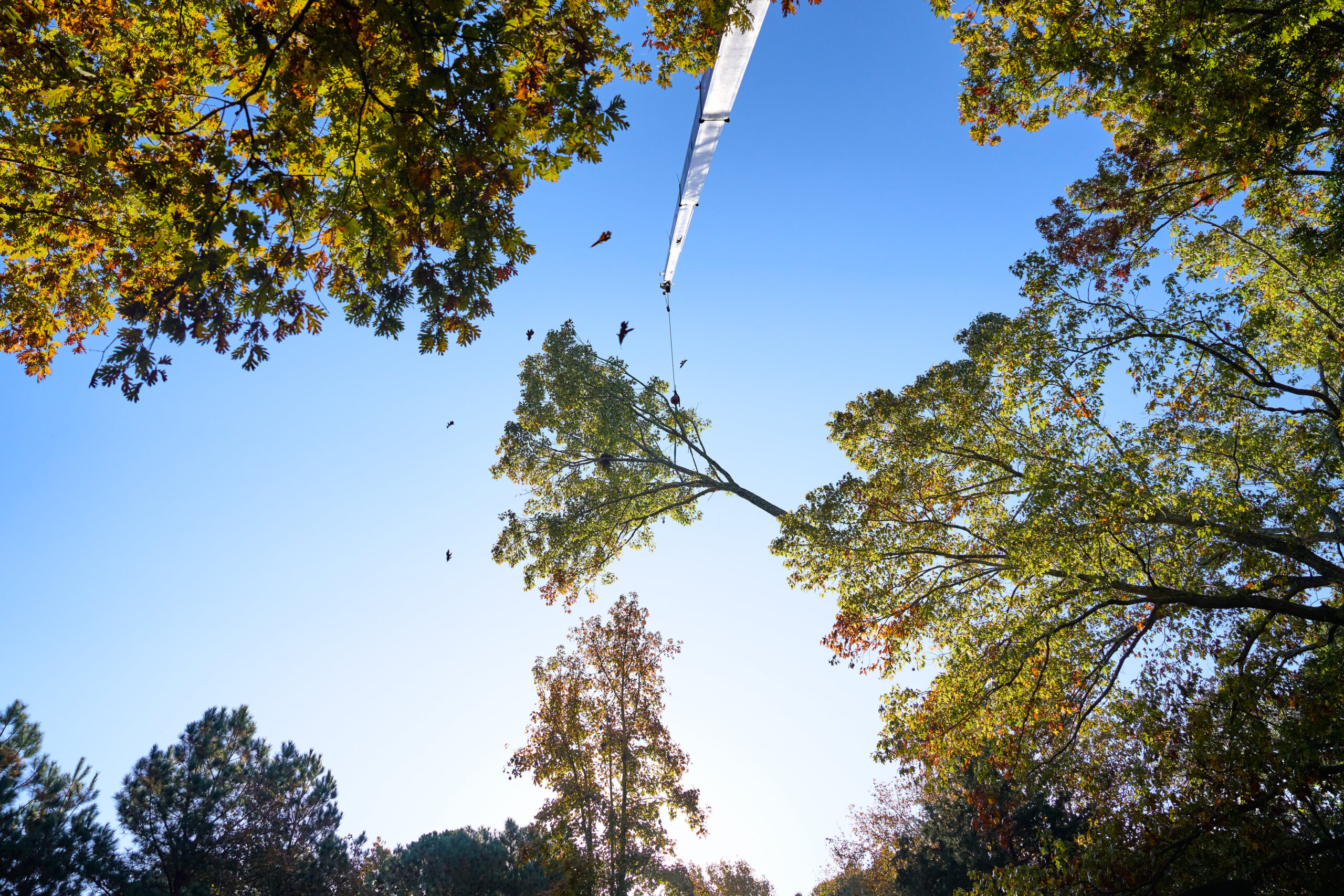
• Whether safe removal methods require climbing (with or without extensive rigging), a crane or other heavy machinery, or felling.
• Cleanup needs
• Stump grinding (optional but commonly requested)
• Skill level of the crew (and fair compensation of workers)
For example, a small redbud removal in an open yard might only cost up to a few hundred dollars to remove. A large willow oak with a lean and sprawling canopy over a home with limited access and active decay can cost much more. These projects require highly skilled workers on site, specialized rigging, and sometimes a crane to remove safely.
How do size and complexity factor into tree removal cost?
A large percentage of the cost comes down to the tree’s size and how challenging it is to remove safely. A tall pine with a small canopy is very different from a mature hardwood with a wide spread, and both of these scenarios change if they are in an open area versus right next to your house.
Broad-canopy trees—like white oaks, willow oaks, or maples—often require more time and controlled rigging, especially in tight residential spaces.
Height also matters. Removing a 60-foot tree is not the same as removing a 30-foot tree even if they share similar trunk diameters. Think about all the additional volume of wood and brushy material that need to be removed, as well as the additional time spent climbing to and accessing particularly tall (or wide-spreading) canopies.
Access: The Hidden Tree Removal Cost Factor
Access is one of the biggest factors homeowners don’t always consider. If equipment can be safely brought close to the tree, removal is faster and more cost-efficient.
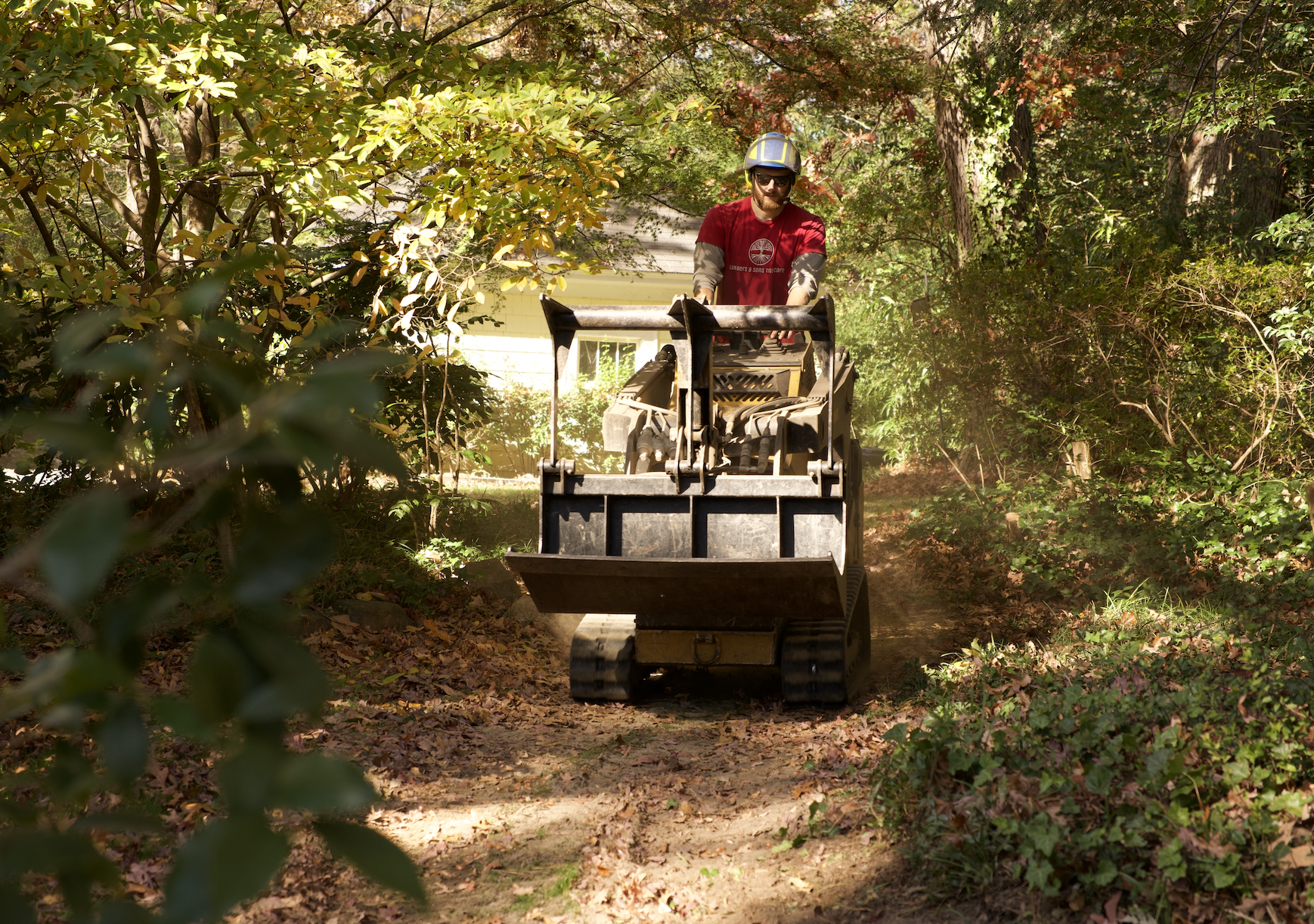
We (like many tree companies) use a mini skid-steer with approximately a 42″ width, so we can get through many (but not all) fence gates. We always advise clients who are building a new home, adding a fence to their property, or doing renovations to consider equipment access. Lack of access can add hundreds of dollars to future unforeseen projects! Opt for a double gate whenever possible.
If your tree is located:
- behind a fence,
- down a narrow path,
- behind a garden,
- down or up stairs (in a terraced area),
- or near delicate landscaping,
…then removals must be done with climbing and roped rigging techniques, and debris removed without full use of machinery. This increases labor and time.
In Chapel Hill, many neighborhoods have trees growing close to homes or in tight backyards, which often impacts removal methods and pricing. If you’ve got a tree in one of the above mentioned scenarios that needs to go, you are not alone!
Hazard Conditions Change Everything
Trees compromised by decay, cracks, certain pests, diseases, or root issues are far more dangerous to remove. When a tree is unstable, climbers may not be able to safely ascend it, or a very skilled climber using specialized work methods will be necessary. In those cases, we may need to use specialized equipment, cranes, or alternative rigging setups.
Hazard removals also require more planning and more safety measures. All of this factors into your price. This is why we always advise clients who have a serious tree hazard in the making to take action sooner rather than later. A tree removal can turn from relatively straight forward to complex and hazardous in a relatively short period of time depending on the circumstances.
This is why if you’ve got ash trees, you’ve definitely heard us urge you to make a decision to remove or treat before allowing nature to take it’s course for too long.
Emergency tree hazards, or a sudden time sensitive need for a tree removal, can also increase price. Work conditions are uniquely hazardous in storm-damaged tree removals, and scheduling needs often require us to shuffle our existing schedule.
Why Tree Removal Should Never Be “Cheap”
There is no way around it– tree work is a hazardous job. On average, someone dies in the tree care industry in the US once every 4-5 days (about 30x more than the all-industry average for workplace fatalities). There’s an equally disturbing rate of non-fatal serious injuries– we have approximately 1 fatal accident for every 14 non-fatal accident (compared to the 1 in 350 average across other sectors). In short, tree workers are injured on average at a much higher rate than people working in nearly any other industry, and we are not surviving our workplace injuries as often. (Read more here)
The vast majority of these incidents are avoidable with proper training and attention to detail. Many of the injuries happen due to improperly trained personnel working outside of their skillset, often without even having the proper safety gear/PPE.
This is why safety has to be the number one priority for every single member of any good tree care company. Our industry is full of risks and hazards, but it does not have to be full of danger (if the hazards are properly mitigated and workers are properly trained).
You want to work with a company that has:
- Specialized training
- Rigging knowledge
- Safety equipment
- Insurance
- Experience in dynamic situations
Cheaper prices can sometimes (but not always) indicate:
- Inadequate or no insurance
- No certified arborist involved
- Unsafe practices
- Little to no cleanup
- Topping or improper cuts
- Workers exposed to unnecessary risks
- Disorganized or lacking customer service
It is certainly possible that you just got a good deal from a totally reputable company, but it is usually wise to do a little digging if you’ve got one quote that came in at half the cost of your others. Ask for certificates of insurance (current, and direct from their insurance company), read google reviews, look at their website, ask about the qualifications and skillsets of the workers who will be on site for your project.
We have been called out many times to finish removals that another company started—and couldn’t safely complete—because they underestimated the complexity or were simply disorganized. These situations often end up costing homeowners more in the long run.
What Homeowners Can Expect in Chapel Hill
While every tree’s situation is unique, here are some general guidelines:
- Small ornamental trees: Generally cheapest/most affordable
- Medium-sized hardwoods or pines: Varies based on access
- Large hardwoods with spreading canopies: Higher due to height and complexity
- Hazard trees: Most costly due to risk factors
Geography also plays a role. Chapel Hill has many mature hardwood neighborhoods where trees grow close to structures, making careful rigging essential.
You are fortunate to live in an area with several qualified tree services and many skilled tree care professionals. There are many areas in the country where access to a knowledgable arborist is a real challenge. Expect to do a little research the first time you select an arborist for your tree removal project, but rest assured that there are good options to choose from in our area.
What’s Included in a Professional Removal
With a reputable arborist-led company, removal typically includes:
• Safe dismantling
• Controlled rigging
• Removal of debris
• Cleanup
• Stump grinding (if requested)
• Protection of surrounding property
You’re paying for safety, expertise, and peace of mind—not just the act of cutting.
Final Thoughts
Tree removal isn’t a one-size-fits-all service, and pricing reflects the complexity, risk, and skill involved. If you want clarity on your specific situation, we are always happy to evaluate the tree, provide a quote, explain what factors influence the cost, and help you make the decision that’s right for you and your property. Reach out today!
Sosha
She is the Owner, Operator, and an ISA Certified Arborist with expertise in everything from plant health to administrative management. A true "wearer of many hats," her dynamic life doesn't stop when the workday ends. A professional MMA fighter, banjo player, and artist, she is living proof that you can be both tiny and mighty.
Recent Posts


Local Expertise. No Sales Pitch.
We’re local tree enthusiasts who care about the health of North Carolina’s trees – and our community. You’ll get
honest advice, thoughtful recommendations, and zero pushy sales tactics.
We’re local tree enthusiasts who care about the health of North Carolina’s trees – and our community. You’ll get honest advice, thoughtful recommendations, and zero pushy sales tactics.
Hazardous trees don’t wait. We offer financing options and flexible scheduling so you can
take care of the problem now, keeping your property and family safe.