
Just like us, you probably love trees for the beauty, shade, color, and ecological benefits they provide.
But how often do we think about what’s happening under the surface? There’s a whole world of biological phenomena happening below the soil, in the root zone.
That’s unfortunate, as many urban and suburban trees have root systems that are silently struggling and forced to contend with things like improper planting, limited growing space, soil compaction, root damage, pests, and diseases.
This can ultimately prevent these trees from reaching their full potential, or even cause them to begin declining.
Fortunately, there are things our arborists can do to help support your trees’ roots, and by extension, your trees. We’ll explain everything you need to know about root zone health and some of the best ways our arborists can help below.
Five Common Problems Tree Root Zones Experience
There are a myriad of problems that can afflict tree roots, but we’ll outline five of the most common issues North Carolina trees experience below.
1. Buried Root Flares

Trees should widen at the base of the trunk where the tree meets the soil so that you can see something called the root flare. If your tree’s trunk goes straight into the ground like a telephone pole, the root flare is likely buried, which may be causing the tree to suffer from health problems.
Buried root flares are extremely common, and they can be caused by a range of things, including improper planting, incorrect mulch application, or grading changes during a construction or landscaping project.
2. Girdling Roots
Girdling roots are another common issue for landscape trees. Named for the way they “strangle” or “girdle” the trunk or other roots, girdling roots often occur in trees with buried root flares or growing in compacted soil. They can also form when nursery-grown trees are left in small pots for too long.
Left unaddressed, girdling roots may kill other roots or cause portions of the tree to become starved of water and vital nutrients. They can even cause a tree to become structurally unstable at times, potentially leading to whole-tree failure.
3. Soil Compaction
In addition to nutrients, tree roots need soil that provides access to both oxygen and water. But when soil becomes compacted, it can be hard for them to obtain these vital resources, and it can even lead to anoxic (oxygen-free) conditions that may support the growth of harmful bacteria.
Unfortunately, compacted soil is quite common, especially in urban and suburban landscapes. It can be caused by a variety of things, including construction, hardscapes, foot traffic, or heavy machinery. It can also occur when soil is left exposed for a lengthy period without ground cover or mulch.
4. Limited Space
Tree roots need adequate space to grow and spread, but landscape trees often have to grow in small spaces, thanks to nearby buildings, sidewalks, driveways, roads, retaining walls, or other obstacles. This can leave trees with a much smaller area of suitable soil than they would have in a natural setting.
When roots are confined to a limited space, they may struggle to access the water, oxygen, and nutrients the tree needs. Limited growing space can also contribute to girdling roots and conflicts with hardscapes or even prevent the tree from being properly anchored.
5. Root Damage
Tree roots can also suffer direct physical damage from construction, landscaping, trenching, grading, or other activities that disturb the soil. Because the bulk of a tree’s absorbing roots are located relatively close to the soil surface, even seemingly minor projects around a tree can cause significant damage.
Damaged or severed roots can reduce the tree’s ability to absorb water and nutrients, while damage to larger structural roots may affect stability. The effects aren’t always immediately obvious, either; in some cases, a tree may only begin showing signs of stress or decline years after the original damage occurred.
Clues That Your Trees May Have Root-Zone Issues
Because root problems are often essentially invisible, it’s important to watch for any signs indicating that they’re struggling. A few of the most common clues that indicate your trees may benefit from an evaluation and, potentially, our Root Zone Rehab services include:
- Thinning foliage or canopy dieback
- Leaves that are smaller than normal
- Premature fall color or leaf drop
- Slow or stunted growth
- Wilting or scorched leaves
- Mushrooms or fungal growth near the base of the tree
- Visible girdling roots or a buried root flare
- Cracks or lifting in nearby sidewalks, driveways, or other hardscapes
- Recent construction, grading, or soil disturbance near the tree
How a Tree Health Specialist Can Help
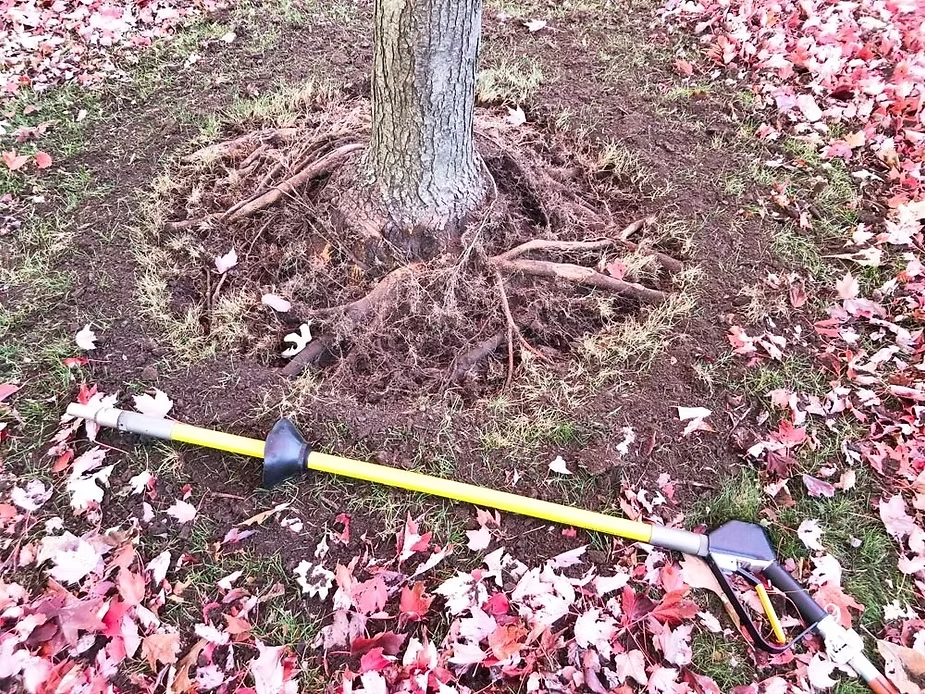
The AirSpade or Soil Knife is an advanced arboricultural tool that uses compressed air to loosen compacted soil without damaging the tree’s sensitive roots. It is often the best way to address below-ground issues and provide visibility of the root zone.
It is also a chemical-free and cost-effective technique, which can help improve tree health and promote longevity.
A few of the most common goals our arborists can achieve with an AirSpade include:
- Exposing buried root flares
- Excavating soil near trees without harming roots
- Increasing the amount of oxygen available to roots
- Providing the chance to visualize a root system
- Identifying (and then correcting) girdling roots
- Diagnosing pest or disease issues affecting tree roots
- Exploring areas in which roots are causing infrastructure or hardscape conflicts
Our Root Rehab Program
Our Root Rehab program can be beneficial at several times of year, though the dormant season is often preferred when corrective root pruning is needed, particularly when larger girdling roots must be addressed.
These interventions can benefit young trees that were planted incorrectly or are growing in challenging soils, as well as established, mature trees. We especially recommend Root Rehab following construction, major landscaping projects, or grading changes that may have disturbed the root zone.
The components of our root zone rehabilitation program typically include:
- Root collar excavation and de-compaction with an AirSpade
- Corrective root pruning to address roots that are girdling, unhealthy, or creating conflicts
- Root health assessment and treatments for pests or pathogens
- The introduction of nutrients and organic matter into the soil
- Mulch application above the root zone
And because Lubbers & Sons Tree Care is committed to providing long-term, ongoing tree care, we offer optional follow-up inspections to assess new growth and provide additional soil treatments or amendments when appropriate.
Let Us Provide the Support Your Trees’ Roots Need!
Healthy roots are critical for the health and longevity of your trees. But because they’re located underground, it can be easy to miss the early issues that will lead to above-ground problems later. But the Lubbers & Sons Tree Care team is here to help.

We employ environmentally sound, scientifically established practices that can help keep your trees’ roots — and therefore the rest of the trees — healthy.
Contact our team today to learn more about our Root Rehab services and schedule your complimentary evaluation.


